


Horse Equipment Suppliers Australia: A Buyer’s Guide
A worn lead rope, a saddle pad ready for replacing, or a grooming brush that has seen better days. Anyone who spends time around horses

Choosing the right riding crop might seem straightforward, but with different lengths, handle styles and designs available, it’s worth understanding what makes one suitable for your riding needs.
Whether you’re a beginner building confidence in the saddle or an experienced rider looking to replace an old favourite, a well-chosen riding crop can be a useful addition to your equestrian equipment.
From understanding how riding crops work to recognising when it’s time for a replacement, this guide covers the essentials to help you make an informed choice.
A riding crop is a short, handheld riding aid used in horse riding to support communication between horse and rider. It is generally designed with a handle, a flexible shaft and a flapper or similar fitting at the end.
Riding crops are sometimes referred to as riding whips, although the wider category of horse riding whips also includes longer designs used for dressage, lunging and driving.
Unlike longer training whips, riding crops are compact and intended to be carried while mounted.
They are commonly used as supplementary aids, rather than replacements for correct riding technique, clear leg cues or consistent training.
For riders exploring different styles, the horse riding crops collection at Your Saddlery Australia offers options with different grips, lengths and finishes.
A riding crop is primarily used to reinforce a rider’s existing aids when appropriate. It can help clarify a request already communicated through the rider’s seat and legs.
Correct use depends on the horse, the rider’s experience and the activity being undertaken.
Horses learn to respond to consistent cues. A riding crop may be used as an additional signal when a horse does not respond to a correctly applied leg aid.
However, timing, technique and the horse’s understanding are far more important than the crop itself.
A riding crop should never be used to punish a horse, express frustration or compensate for pain, fear or inadequate training.

General-purpose riding crops are often chosen for schooling and everyday riding because of their compact design and ease of carrying.
For riders looking for a straightforward option, the Economy Riding Crop is an affordable choice featuring a foam handle, braided shaft and fixed rubber flapper.
Its simple construction makes it worth considering for riders who prefer a practical, no-frills riding accessory.
Not every riding crop feels the same in your hand. Small differences in grip, length and construction can influence comfort and suitability.
Understanding these features can make shopping for a new riding crop much easier.
Foam-handled riding crops are a practical choice for riders who prefer a softer grip.
These crops often feature a straightforward design that makes them suitable for riders seeking an affordable general-purpose riding accessory without unnecessary extras.
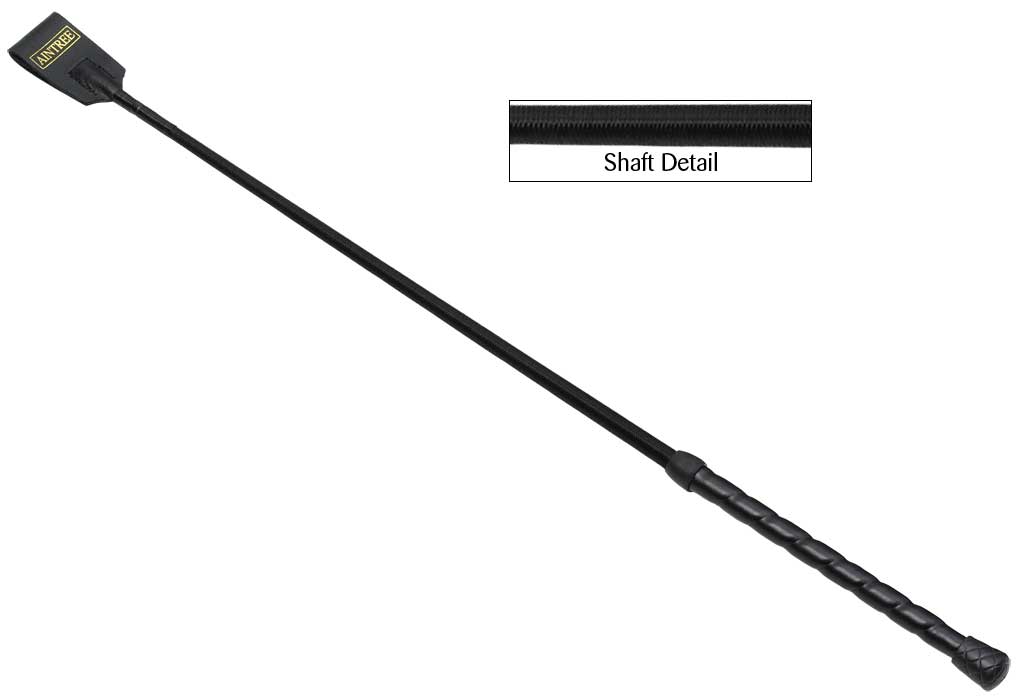
Leather-handled riding crops offer a more traditional appearance and may appeal to riders who prefer a classic equestrian finish.
The Leather Grip Riding Crop features a leather grip handle, braided shaft and closed flapper.
At 65cm long, it is available in black and brown and may suit riders looking for a traditional crop design.
Its suitability for competition depends on the specific rules of the event and discipline.
Length is another important consideration when choosing a riding crop.
A crop should be comfortable to carry and allow the rider to use it correctly without disrupting their position or rein contact.
A longer crop is not automatically better, and the most suitable length depends on the rider, horse and intended activity.
Before purchasing, consider whether the crop meets any length restrictions applicable to your riding discipline.
Rather than selecting a riding crop based on appearance alone, think about how and where you intend to use it.
A few practical considerations can help narrow down the options.
For general-purpose riding, a simple, comfortable crop may be all you need.
If you participate in organised competitions, check the relevant equipment rules before buying. Some disciplines restrict whip length, design or use, while certain classes do not permit whips at all.
A secure grip is important when carrying a crop alongside the reins.
Foam grips may appeal to riders looking for a softer handle, while leather grips offer a more traditional finish.
Neither is universally better. Personal preference and how the crop feels in your hand should guide your decision.
Look at the shaft, handle attachment and flapper before choosing a riding crop.
The crop should be free from sharp edges, loose fittings or visible damage.
A well-maintained crop is easier to handle and less likely to develop problems during use.
An expensive riding crop isn’t necessarily the best choice for every rider.
If you’re looking for a simple option for occasional or everyday riding, an affordable crop may meet your needs.
Alternatively, riders who prefer a particular handle material or finish may choose a more traditional design.
The right purchase is the one that suits your riding requirements, comfort and budget.
Riding crops are not necessarily unsuitable for beginners, but learning when and how to use one is essential.
New riders should first develop an understanding of basic riding aids, balance and rein control.
A qualified riding instructor can help determine whether carrying a crop is appropriate and demonstrate how to use it responsibly.
For some beginners, focusing on seat and leg aids without a crop may be the better starting point.
The goal should always be clear communication and the horse’s welfare, rather than relying on additional equipment to achieve a response.
Like other pieces of equestrian equipment, riding crops can deteriorate with regular use and storage.
Even if a crop still looks serviceable at first glance, damage to its construction may affect its suitability.
Common signs that it may be time for a replacement include:
Inspecting your riding crop regularly is a simple habit that can help you identify problems before your next ride.
If the crop is damaged, replacing it is generally preferable to continuing to use equipment that may be unsafe.
A little regular care can help maintain your riding crop’s condition.
After riding, remove dirt and moisture with a soft cloth. If necessary, use a slightly damp cloth on suitable surfaces, avoiding excessive soaking.
Allow the crop to dry naturally before storing it.
Avoid leaving riding crops in direct sunlight, extreme heat or damp storage areas for extended periods, as these conditions may affect certain materials.
For leather-handled crops, follow appropriate leather-care instructions and avoid applying products that could make the grip slippery.
Store your crop where it will not be crushed, sharply bent or damaged by other equipment.
Choosing a riding crop comes down to finding a comfortable, practical option that suits your riding activities and preferences.
For everyday riding, the Economy Riding Crop offers a budget-friendly design with a foam handle and fixed rubber flapper.
Riders who prefer a traditional finish may consider a leather-handled option, particularly if they favour a classic equestrian design.
Not sure which style is right for you?
Browse the full range of horse riding whips and crops at Your Saddlery Australia to compare different designs and find an option that suits your needs.
A riding crop is a type of riding whip, generally shorter and designed for use while mounted. Other horse riding whips, such as dressage, lunging and driving whips, have different designs and intended applications.
The appropriate length depends on your riding activities, comfort and any applicable competition rules. Choose a crop that can be carried and used correctly without interfering with your riding position or rein contact.
Beginners may use a riding crop under the guidance of a qualified riding instructor. Correct technique, timing and an understanding of horse behaviour are essential before introducing additional riding aids.
There is no fixed replacement schedule. Inspect your crop regularly for damage to the handle, shaft and flapper, and replace it when wear or deterioration could affect safe use.
A worn lead rope, a saddle pad ready for replacing, or a grooming brush that has seen better days. Anyone who spends time around horses